
Semax is a synthetic ACTH(4-10)-derived heptapeptide studied primarily in Russian neurology journals and preclinical models. It is not an FDA-approved medication. Under the FDA's 503A bulk drug substances tables (current as of April 22, 2026), semax (heptapeptide) was nominated for Category 2 and subsequently withdrawn; withdrawal of a nomination is not an approval or clearance to compound.
1. Mental Clarity as Natural Flow & Cognitive Gentleness
In an achievement-focused culture, optimal cognition is often mistaken for aggressive, constricted focus—pushing through mental fatigue with stimulants and sheer willpower at the expense of later crashes and burnout. Yet forced concentration is stress masquerading as productivity: the nervous system operating in survival mode, narrowing awareness at the cost of creativity, intuition, and emotional balance.
True mental clarity is spacious rather than constricted, effortless rather than forced. Psychologists describe this as the flow state—being so fully present with meaningful work, art, or conversation that effort and ease merge. Rather than trying to transcend natural human rhythms, cognitive gentleness honors the ebb and flow of mental energy across the day: periods of engaged focus balanced by rest, diffuse attention, and quiet integration.
2. Understanding Semax: Neurotrophic & Neuroprotective Research
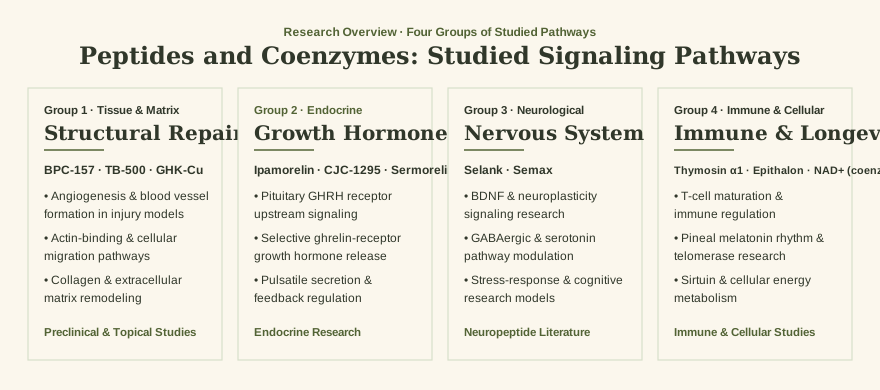
Semax emerged from decades of Russian research into peptides that support cognitive function and neuroprotection under demanding conditions. It is a synthetic analog of a fragment of adrenocorticotropic hormone, ACTH(4-10), which is studied for its central nervous system signaling without hormonal adrenal steroid stimulation.
In published preclinical and regional neurological research—which describes experimental mechanisms rather than guaranteed personal treatment effects—Semax has been investigated across several interconnected pathways:
- BDNF & NGF Expression in the Hippocampus: Brain-derived neurotrophic factor (BDNF) and nerve growth factor (NGF) support the survival of existing neurons, the growth of new synapses, and the synaptic plasticity underlying learning and memory. Research has shown that Semax significantly enhances BDNF expression, particularly in the hippocampus, and studies have documented its regulation of BDNF expression in brain regions crucial for memory and executive function.
- Monoamine and Cholinergic Balance: Research examines how Semax modulates dopamine, norepinephrine, and serotonin metabolism alongside cholinergic attention pathways, studying how balanced neurotransmitter signaling supports calm alertness without stimulant-like agitation.
- Neuroprotection and Inflammatory Modulation: Chronic neuroinflammation and oxidative stress are major contributors to cognitive fatigue and decline. Research suggests that Semax helps modulate inflammatory processes in neural tissue and protect neurons against oxidative stress.
3. FDA Regulatory Context & Analytical COA Verification
Readers evaluating Semax literature should keep its regulatory and analytical context clearly in view:
- FDA Bulk Drug Substances Status (Updated April 2026): Semax is not an FDA-approved medication. On the FDA's 503A bulk drug substances list (current as of April 22, 2026), semax (heptapeptide) was nominated for Category 2 and subsequently withdrawn; withdrawal of a nomination is not an approval or clearance to compound.
- Analytical COA Verification: At Oath Research (a US research-peptide supplier selling direct to researchers for research use only, shipping within the US only, and never advising on human dosing), each shipped batch carries a Certificate of Analysis from an independent third-party laboratory, Freedom Diagnostics. Certificates report HPLC-UV purity, LC-MS identity confirmation, and net peptide content (99.64% average purity over the trailing twelve months across more than 500 batches tested as of October 2026). Oath cites USP <85> as its endotoxin standard; this does not establish an endotoxin result for each certificate. Visit our Clean Source Guide and the Oath Research COA archive for full verification criteria.
4. Mindfulness, Brain Ecology, and Clarity Beyond Productivity
The brain represents roughly 2% of total body weight yet consumes about 20% of the body's energy and oxygen. Sustainable mental clarity arises from caring for the whole-system ecology of mind and body:
Mindfulness and the Practice of Presence
As explored in Peptides & Meditation, mindfulness trains the skill of noticing when attention has wandered and gently returning to the present moment, cultivating metacognitive awareness. Research has shown that regular meditation increases cortical thickness in regions associated with attention and sensory processing, enhances connectivity between brain regions, and supports endogenous BDNF production. For readers exploring how emotional poise and focus intersect, our Selank Monograph examines the complementary dimension of nervous system calm.
Nutrition, Movement, and Restorative Sleep
As detailed in Peptides & Nutrition, omega-3 fatty acids (especially DHA), B vitamins, magnesium, and colorful antioxidant-rich foods nourish neuronal membranes while steady blood sugar prevents metabolic brain fog. Regular, enjoyable movement—walking, swimming, dancing, yoga—increases cerebral blood flow and naturally stimulates BDNF, while deep nocturnal sleep enables glymphatic waste clearance and memory consolidation.
The Cognitive Seasons & Clarity for Life
Just as a garden cannot stay in perpetual summer without depleting its soil, cognitive life has natural seasons: Spring Renewal for learning fresh skills, Summer Vitality for outward creative expression, Autumn Harvest for consolidating and integrating knowledge, and Winter Rest for quiet contemplation. Ultimately, the deepest fruits of mental clarity reach far beyond workplace productivity—allowing us to listen wholeheartedly to the people we love, make room for play, wonder, and curiosity, and show up fully for our lives. Because cognitive difficulties can also stem from underlying medical conditions, persistent brain fog or memory changes always warrant evaluation by a qualified healthcare professional.
5. Frequently Asked Questions
What is Semax and what mechanisms are described in scientific literature?
Semax is a synthetic heptapeptide analog of an adrenocorticotropic hormone fragment, ACTH(4-10). Published studies—primarily in Russian neurology and preclinical literature—examine its effects on brain-derived neurotrophic factor (BDNF) and nerve growth factor (NGF) expression, monoamine and cholinergic balance, and neuroprotection.
What is Semax's FDA regulatory and compounding status?
Semax is not an FDA-approved medication. Under the FDA's 503A bulk drug substances tables (current as of April 22, 2026), semax (heptapeptide) was nominated for Category 2 and subsequently withdrawn; withdrawal of a nomination is not an approval or clearance to compound.
How do mindfulness, rest, and lifestyle practices support mental clarity?
Regular mindfulness meditation, restorative sleep for glymphatic clearance, omega-3-rich and blood-sugar-stable nutrition, enjoyable aerobic movement, and honoring natural cognitive seasons support endogenous BDNF production and sustainable mental clarity.
What does a batch Certificate of Analysis report for Semax?
At Oath Research, each batch carries a Certificate of Analysis. Certificates report HPLC-UV purity, LC-MS identity confirmation, and net peptide content. Oath cites USP <85> as its endotoxin standard; this does not establish an endotoxin result for each certificate.
Primary Literature & Archival Citations
- Research on Semax enhancing BDNF expression in the hippocampus and neurotrophic signaling (PMC4697050).
- Research on regular meditation, cortical thickness, brain connectivity, and neurotrophic support (PMC6312586).
- PubMed studies on Semax and BDNF expression in brain regions involved in memory and executive function (PubMed 17626795).
- Research on Semax modulating inflammatory processes in neural tissue and supporting neuroprotection (PMC5651286).