
Selank has been investigated primarily in Russian clinical cohorts and preclinical neurochemistry models. It is not an FDA-approved medication. Under the FDA's 503A bulk drug substances tables (current as of April 22, 2026), selank acetate was nominated for Category 2 and subsequently withdrawn; withdrawal of a nomination is not an approval or clearance to compound.
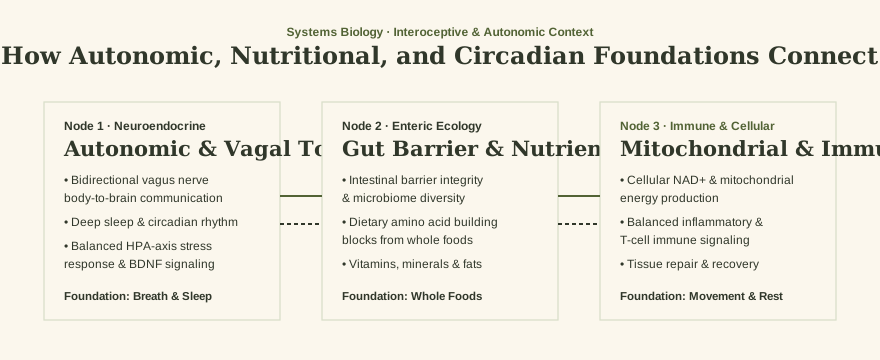
1. The Invitation to Stillness: Calm as Your Natural State
Living in a constant state of alert carries a distinct exhaustion—shoulders holding unnoticed tension, breath staying shallow in the upper chest, thoughts skipping restlessly from one worry to the next. Yet beneath the surface turbulence of stress and reactivity, the nervous system retains an innate capacity for stillness.
Think of a lake on a windy afternoon: the surface churns with waves, yet deeper water remains calm and undisturbed. In a holistic understanding of emotional wellbeing, calm is not an artificial state that must be forced into existence, nor is anxiety simply an enemy to be silenced. Often, anxiety arrives as a messenger pointing toward overextended boundaries, unmet needs for rest or connection, or chronic environmental stressors. When hypervigilance softens, there is space between stimulus and response to hear what life is asking of us and respond with clarity rather than panic.
2. Understanding Selank: Neurotransmitter & Neurotrophic Research
Selank emerged from Russian research into peptides that interact with the nervous system without the sedation or dependence associated with conventional benzodiazepine medications. It is a synthetic heptapeptide derivative of tuftsin, a naturally occurring peptide involved in immune communication networks.
In preclinical and regional clinical studies—which represent investigational research rather than guaranteed personal treatment outcomes—Selank has been examined across several interconnected neurobiological pathways:
- GABAergic Modulation & BDNF Expression: GABA is the brain's primary inhibitory neurotransmitter, helping quiet loops of anxious rumination. Selank is studied for its modulation of GABA receptor signaling, and research has shown that Selank supports the production of brain-derived neurotrophic factor (BDNF), a protein essential for neuroplasticity and adaptive learning.
- Stress-Induced BDNF Depletion & Neuroplasticity: Research has shown that chronic stress and anxiety reduce BDNF levels, impairing the brain's capacity to form new neural connections and adapt to challenges. Studying how peptides and lifestyle practices support BDNF highlights the biological foundation for building calmer response patterns.
- Serotonergic and Dopaminergic Balance: Studies have documented Selank's effects on serotonin metabolism, a system deeply involved in mood stability and emotional flexibility, alongside modulation of dopamine pathways associated with motivation and engagement.
- Cognitive Clarity and Nootropic Research: When the nervous system is locked in threat detection, executive function and working memory suffer. Research has documented Selank's nootropic effects in experimental and clinical settings, examining learning, memory consolidation, and cognitive processing alongside anxiety reduction.
3. FDA Regulatory Context & Analytical COA Verification
Readers reviewing Selank literature should keep its regulatory status and analytical verification standards clearly in view:
- FDA Bulk Drug Substances Status (Updated April 2026): Selank is not an FDA-approved medication. On the FDA's 503A bulk drug substances list (current as of April 22, 2026), selank acetate was nominated for Category 2 and subsequently withdrawn; withdrawal of a nomination is not an approval or clearance to compound.
- Analytical COA Verification: At Oath Research (a US research-peptide supplier selling direct to researchers for research use only, shipping within the US only, and never advising on human dosing), each shipped batch carries a Certificate of Analysis from an independent third-party laboratory, Freedom Diagnostics. Certificates report HPLC-UV purity, LC-MS identity confirmation, and net peptide content (99.64% average purity over the trailing twelve months across more than 500 batches tested as of October 2026). Oath cites USP <85> as its endotoxin standard; this does not establish an endotoxin result for each certificate. See our Clean Source Guide and the Oath Research COA archive for full verification criteria.
4. Non-Drug Foundations for Nervous System Healing
Whether or not one explores peptide research, sustainable nervous system regulation depends on daily somatic, relational, and lifestyle practices that signal safety to the body:
Coherent Breathwork & Contemplative Practice
Conscious breathing is the direct bridge into the autonomic nervous system, engaging the vagus nerve to activate parasympathetic rest-and-digest tone. Practicing coherent breathing at a rate of about five to six breaths per minute—inhaling for a count of five and exhaling for a count of five—has been shown in research to optimize heart rate variability, a key marker of nervous system flexibility and resilience. Extended exhales (such as inhaling for four and exhaling for six or eight) and mindfulness meditation further cultivate present-moment ease.
The Body Remembers: Somatic Integration
Anxiety is fundamentally a somatic experience held in tight shoulders, a clenched jaw, a braced diaphragm, and a knotted stomach. Supporting the body through interoceptive awareness, gentle yoga, progressive muscle relaxation, massage, and unhurried movement helps complete stress responses and restore the felt sense of physical relaxation.
Sleep, the Great Restorer
Anxious thoughts and fragmented sleep reinforce one another in a difficult cycle. Creating evening wind-down rituals—gentle stretching, warm magnesium salt baths, calming reading, dimming lights, and honoring seasonal rest needs as explored in Winter Rest—helps restore restorative sleep architecture.
Nourishment, Gentle Movement & Community
As detailed in Peptides & Nutrition, omega-3 fatty acids from wild-caught fish, magnesium, B vitamins, and amino acids from quality protein support neurotransmitter synthesis, while avoiding blood-sugar crashes prevents diet-triggered stress hormone surges. Gentle movement—walking in nature, swimming, tai chi—metabolizes stress hormones without overtaxing an already tired system, while authentic social connection and botanical adaptogens counter the isolation and hypervigilance of chronic stress.
5. Frequently Asked Questions
What is Selank and what pathways does research examine?
Selank is a synthetic heptapeptide analog of the immune peptide tuftsin. Published Russian and preclinical studies have examined its effects on GABAergic signaling, serotonin and dopamine metabolism, and brain-derived neurotrophic factor (BDNF) expression.
What is Selank's FDA regulatory and compounding status?
Selank is not an FDA-approved medication. Under the FDA's 503A bulk drug substances tables (current as of April 22, 2026), selank acetate was nominated for Category 2 and subsequently withdrawn; withdrawal of a nomination is not an approval or clearance to compound.
What non-drug practices support nervous system regulation and emotional calm?
Coherent breathwork (five to six breaths per minute), somatic release and gentle movement, restorative sleep rituals, blood-sugar-stabilizing whole-food nutrition, meditation, and supportive social connection help regulate autonomic tone naturally.
What does a batch Certificate of Analysis report for Selank?
At Oath Research, each batch carries a Certificate of Analysis. Certificates report HPLC-UV purity, LC-MS identity confirmation, and net peptide content. Oath cites USP <85> as its endotoxin standard; this does not establish an endotoxin result for each certificate.
Primary Literature & Archival Citations
- Research on Selank supporting brain-derived neurotrophic factor (BDNF) expression and neuroplasticity (PMC4728855).
- Frontiers in Psychology research on coherent breathing at five to six breaths per minute optimizing heart rate variability (Frontiers in Psychology 10.3389/fpsyg.2017.00874).
- PubMed studies documenting Selank's effects on serotonin metabolism and the serotonergic system (PubMed 17077034).
- Research on chronic stress, anxiety, and reduced BDNF levels (PMC5651286).
- PubMed research documenting Selank's nootropic and cognitive-processing effects (PubMed 23142748).