





What This Site Is
Every compound profile cites the underlying literature and distinguishes experimental models from human clinical research. We do not sell or prescribe, and we have no financial relationship with any vendor we discuss.
New here? Start with Holistic Foundations, BPC-157, or the FAQ—or explore the seasonal essays below. Readers asking how analytical laboratories evaluate reference material should read the Clean Source Guide.

I. Our Philosophy: Honoring the Body's Innate Intelligence
If you have found your way here, you may be looking for a calmer, more thoughtful perspective than quick fixes or isolated symptom-chasing. At the heart of Natural Peptide Therapy lies a principle long recognized in traditional and integrative health: the human body is an adaptive ecosystem constantly working toward balance. Symptoms and fatigue are part of how the body communicates when its foundational needs—sleep, nourishment, movement, and stress recovery—require attention.
Modern biomedical research has provided extraordinary tools, yet treating isolated pathways without considering the whole person often misses the larger picture. Working with physiological processes rather than trying to override them means paying attention to the connections between thoughts, emotions, autonomic balance, and immune function—a relationship explored in emerging research in psychoneuroimmunology, which reveals the intricate connections between our thoughts, emotions, nervous system, and immune function.
II. Dancing With Nature's Seasonal Rhythms
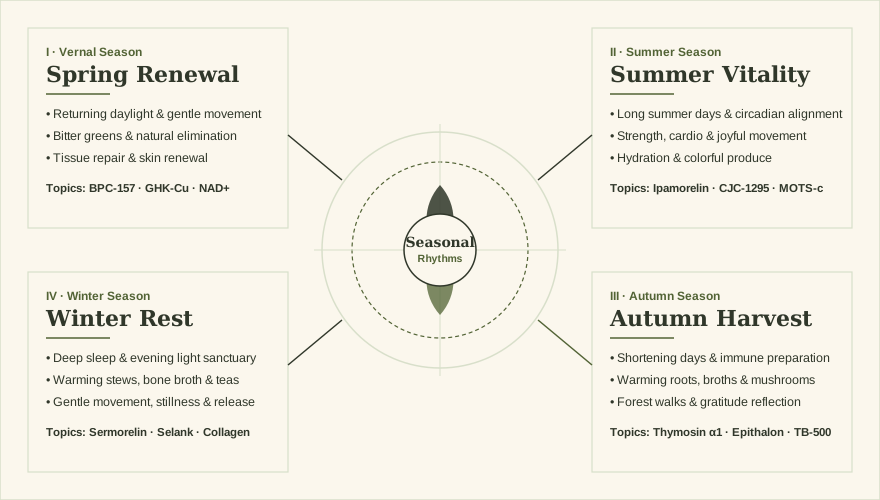
Energy, sleep needs, and appetite naturally shift between summer and winter, and even across the hours of a single day. Just as deciduous trees shed their leaves in autumn and renew growth in spring, human physiology responds to environmental light, temperature, and seasonal transitions.
Traditional healing systems around the world have long observed these cycles. Traditional Chinese Medicine speaks of living in harmony with the seasons, adjusting diet, activity, and self-care practices to align with nature's wisdom, while Ayurvedic traditions describe seasonal routines (ritucharya) to support balance across the year. Modern research in chronobiology reveals that our circadian rhythms influence everything from hormone production to cellular repair, from immune function to mental clarity. Honoring these daily and seasonal rhythms helps build a sustainable foundation for long-term wellbeing.
III. Peptides as Biological Messengers
What are peptides, and why do they appear so frequently in discussions of physiology and healthy aging? Peptides are short chains of amino acids—the same building blocks that make up dietary and structural proteins. Endogenous peptides are naturally present in the body, acting as signaling molecules between cells, tissues, and organs to help coordinate repair, metabolism, immune activity, and neurological signaling.
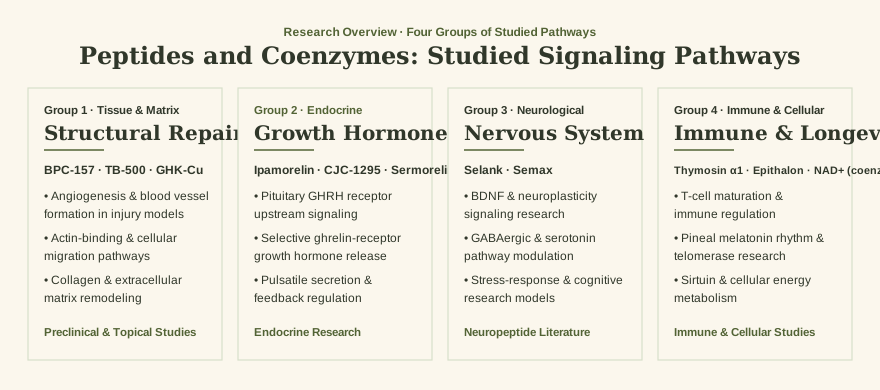
In scientific literature, researchers study diverse peptide families: some are investigated in laboratory models of tissue repair and inflammation, others in studies of growth-hormone signaling and metabolism, others in immune regulation, and still others in cognitive and stress-response research. The scientific literature on bioactive peptides and their therapeutic potential continues to grow, while also highlighting the importance of distinguishing preliminary animal or cell-culture studies from established human clinical evidence.
IV. Explore Reader Pathways & Research Themes
Every reader arrives with different questions. Rather than a one-size-fits-all formula, our library organizes its educational essays around six recurring themes of whole-person health and research inquiry:
Metabolic Harmony
Questions around energy processing, insulin sensitivity research, nutrient foundations, and lifestyle factors that influence metabolism.
Radiant Vitality & Energy
Understanding cellular energy production, mitochondrial coenzymes such as NAD+, circadian alignment, and recovery from fatigue.
Graceful Aging & Skin Health
Exploring collagen matrix biology (GHK-Cu, Collagen), telomere research, purpose, and social connection across the lifespan.
Immune Resilience
Examining thymic peptide research, T-cell maturation studies, gut microbiome diversity, and stress regulation.
Physical Recovery & Tissue Study
Reviewing preclinical soft-tissue and angiogenesis research (BPC-157, TB-500) alongside rest, nutrition, and patient recovery.
Emotional Balance & Calm
Studying neuropeptide research (Selank, Semax) alongside meditation, breathwork, and nervous-system support.
V. Reference Index of Compound Monographs
Each monograph in our library reviews what is studied in the scientific literature, separates animal and cell-culture observations from human studies, and notes current US regulatory context:
| Compound Monograph | Compound Category | Primary Research Topics | Regulatory Context (April 22, 2026) |
|---|---|---|---|
| BPC-157 | Pentadecapeptide (gastric protein fragment) | Angiogenesis, soft-tissue and gastrointestinal models | Preclinical models; FDA Category 2 nomination withdrawn (not approved) |
| TB-500 | Synthetic fragment of Thymosin Beta-4 | Cell migration, blood-vessel formation, and tissue-repair research (TB-500 is a fragment and is not full-length thymosin beta-4) | Preclinical research; FDA Category 2 nomination withdrawn (not approved) |
| GHK-Cu | Endogenous copper-binding tripeptide | Collagen synthesis, skin elasticity, wound remodeling, and antioxidant research | Topical cosmetic studies; injectable routes FDA Category 2 nomination withdrawn |
| Ipamorelin | Selective ghrelin-receptor agonist | Pulsatile growth-hormone signaling and endocrine research | Listed in FDA Category 2 (503B) and withdrawn nominations table |
| CJC-1295 | Synthetic GHRH analog | Growth-hormone and IGF-1 signaling duration and pulsatility research | FDA Category 2 nomination withdrawn (not approved) |
| Sermorelin | 29-amino-acid GHRH fragment | Upstream pituitary GHRH signaling and feedback regulation | Clinical literature discussed in the monograph; medical oversight required. |
| Thymosin Alpha-1 | Thymic signaling peptide | T-cell maturation, dendritic-cell signaling, and immune modulation | Studied clinically outside the US; US FDA Category 2 nomination withdrawn |
| Epithalon | Synthetic pineal tetrapeptide | Telomerase activity in cell culture, pineal melatonin, and aging research | Experimental literature; FDA Category 2 nomination withdrawn |
| Selank | Synthetic tuftsin analog | GABAergic signaling, BDNF expression, and stress/anxiety research | Unapproved in the US; FDA Category 2 nomination withdrawn |
| Semax | ACTH(4-10)-derived peptide | BDNF expression, neuroplasticity, and cognitive research models | Unapproved in the US; FDA Category 2 nomination withdrawn |
| Collagen Peptides | Hydrolyzed structural protein peptides | Oral skin hydration/elasticity, joint comfort, and connective-tissue nutrition | Dietary protein/supplement ingredient |
| NAD+ | Cellular dinucleotide coenzyme (not a peptide) | Mitochondrial ATP production, sirtuin activation, and DNA repair | Endogenous coenzyme and precursor nutrition research |
VI. Beyond Peptides: A Truly Integrative Approach
Lasting wellbeing emerges from tending to all aspects of life—physical, emotional, mental, and relational. Across our integration essays, we explore how foundational practices support the body's natural resilience:
- Mindful Nutrition: Eating whole, nutrient-dense foods that provide amino acids, vitamins, minerals, healthy fats, and antioxidants while honoring individual tolerances.
- Restorative Movement: Finding consistent, enjoyable movement—whether walking in nature, strength training, yoga, or swimming—paired with adequate recovery.
- Quality Sleep: Protecting deep, restorative sleep through evening rituals that signal safety and calm to the nervous system.
- Stress Alchemy & Contemplation: Using breathwork, meditation, adaptogenic herbs, and time outdoors to help regulate stress responses.
- Interoception & Natural Cycles: Listening patiently to internal bodily signals and reflecting on seasonal and monthly rhythms without rigid rules.
- Why COA Literacy Matters: Because lyophilized research peptides look identical to the naked eye, independent third-party batch testing—reporting HPLC-UV purity, LC-MS identity confirmation, and net peptide content from a named laboratory such as Freedom Diagnostics—is essential when evaluating analytical documentation in our Clean Source Guide.
FDA Bulk Drug Substances Context & Educational Scope
This site discusses compounds with different regulatory statuses. Investigational research compounds are not FDA-approved treatments; see each page's regulatory context. Nothing on this site is medical advice, clinical diagnosis, or a dosing recommendation. We do not publish human doses, injection instructions, reconstitution math, or cycling schedules.
On the US Food and Drug Administration's bulk drug substances list (current as of April 22, 2026), AOD-9604, BPC-157, CJC-1295, DSIP, epitalon, GHK-Cu (injectable routes), KPV, LL-37, melanotan II, MOTS-c, PEG-MGF, selank, semax, TB-500, thymosin alpha-1, and dihexa are listed as nominated for Category 2 (substances raising significant safety risks) and subsequently withdrawn; withdrawal of a nomination is not an approval or clearance for compounding. Meanwhile, GHRP-2, GHRP-6, and ipamorelin acetate remain in Category 2 for 503B outsourcing facilities (with ipamorelin acetate also appearing in the withdrawn table), and kisspeptin-10 remains in Category 2 for 503A pharmacies.